Has the Narin murder turned into a media spectacle?
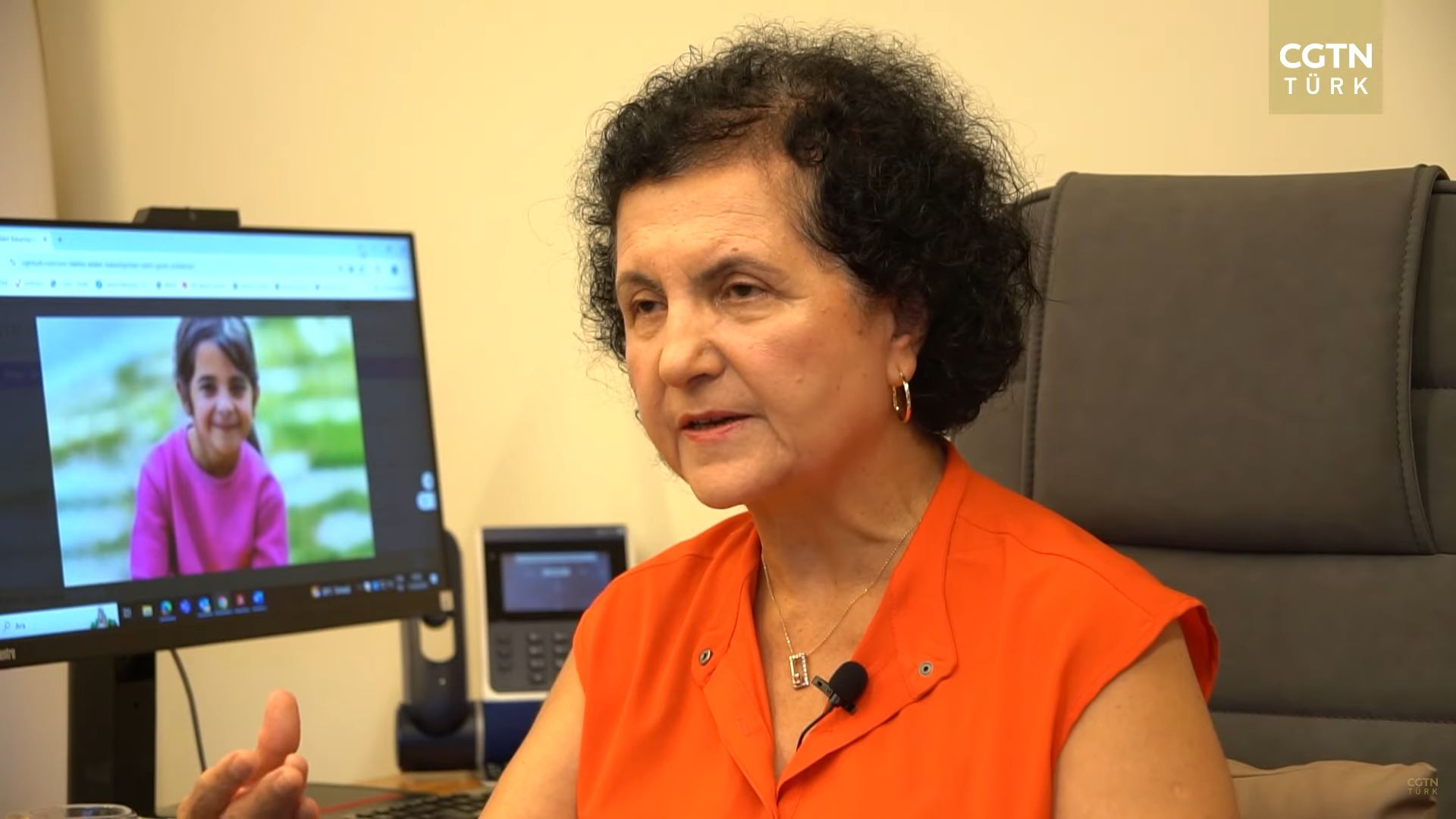
The death of Narin Güran has resurfaced the issue of how the media approaches women and child murders. While some newspapers used expressions such as “She became an angel” and “Her eyes were sparkling” for Narin, presenters on entertainment programs screamed, a news anchor cried live on air, and a reporter said, “I had a feeling she would be found today.” Üsküdar University Rector Prof. Dr. Nazife Güngör evaluated how Narin Güran’s death was handled by the media and the impact of these approaches on society.
The death of 8-year-old Narin Güran, whose lifeless body was found 19 days after she disappeared in the Tavşantepe neighborhood of Diyarbakır’s Bağlar district, deeply affected all of Turkey.
With arrests, releases, search efforts, claims and speculations, the case shook the media agenda and sparked broad public reaction, bringing back into discussion the media’s approach to women and child murders. While some newspapers covered Narin’s death with emotional language such as “She became an angel” and “Her eyes were sparkling,” social media influencers screamed on television, and a reporter commented, “I had a feeling she would be found today.” In addition, a news anchor delivered the news while crying live on air.
How should such incidents be covered in the media, and what points require attention? Üsküdar University Rector Prof. Dr. Nazife Güngör evaluated how Narin Güran’s death was treated in the media and the impact of these approaches on society.
Ratings, circulation, personal showmanship
Stating that such incidents can sometimes turn into spectacles, Nazife Güngör said:
“Some groups try to turn such incidents to their own advantage. There is a horrific incident, yet some groups try to derive maximum benefit from it. Unfortunately, our media also pursued maximum benefit. Some turned this grave incident into a ratings concern, some into a circulation concern, and others into their own personal show,” she said.
“A journalist has no such right”
On some broadcasts, news presenters deliver the news while crying. This overshadows the incident itself. A journalist has no such right; using the incident to stage one’s own show is unacceptable. We conceal the event with our own tears; instead of conveying information, we perform our own show. This must be taken seriously. Now they will say: “We are human too, we cannot stand it, we get emotional.” You must stand it; you must organize your emotions somehow. Deliver your news, and after you finish, go behind the camera and cry, but why cry in front of the screens?”
“Targeting is not the media’s job”
“Some reporters make news in constant tears in the village where the incident took place but say, ‘I cannot get information.’ Then do not stay in that village. This grave incident is also being handled within a legal context. The media must not declare anyone guilty or define criminality before investigation and judicial processes are completed. Targeting or labeling someone as guilty in information delivery is not the media’s job.”
“They are pursuing their own populism as well”
Güngör evaluated politicians’ approach to the Narin incident as follows:
“In the Narin incident, some politicians also intervened and made statements. They too are pursuing their own populism. The incident is turned into a fictional scenario, and the main problem is detached from its context. Then it is forgotten. Such incidents have always occurred in Turkey, but most remained within a closed societal structure. With the spread of social media, local incidents quickly reflect in the media.”
“Have our genes deteriorated?”
Addressing the social dimension of the incident, Güngör said:
“A young child, not yet mature within social relations, is killed due to family problems or chaotic environments; their right to life is taken away. This shows a major social blockage and contamination. Are the problems within family structures, economic issues, or cultural crises? Have our genes deteriorated? All of this needs to be questioned and researched with expert perspectives and academically. Not informing society does not solve the problem. Society must be informed and enlightened. When information is provided, problems are contemplated and solutions are produced. A society unaware of its own problems cannot solve them.”