It Looks So True That There’s No Need to Check!
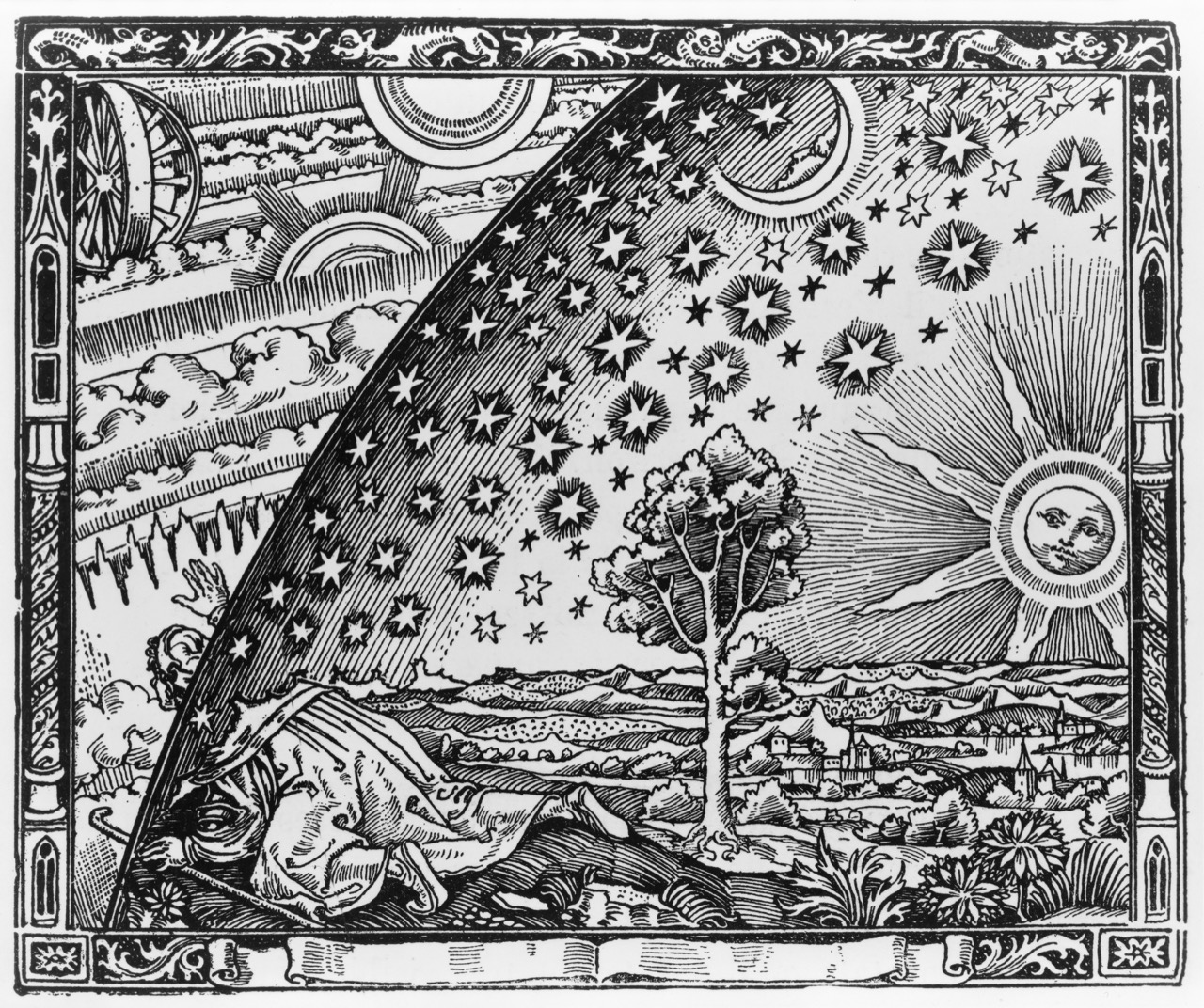

It is a story everyone who has had a primary-school education knows: in the 15th century, Columbus tried to prove that the Earth was round. “If I keep going west, I can reach India in the east,” he claimed. He needed money and ships to set sail. But in those days, because everyone — under the influence of the Church — believed that the Earth was flat as a tray, he could convince no one. Eventually he persuaded the Spanish royal family, found the money and the ships, and was able to set off.
The only problem with this fine story is that it is entirely a fabrication. Because, in the 1490s, there was no sensible person who believed the Earth was flat as a tray. Everyone knew the Earth was round.
Two thousand years before Columbus, in the 6th century BCE, Pythagoras, and in subsequent centuries Aristotle, Euclid, Ptolemy, al-Biruni, Nasir al-Din al-Tusi, and many other scientists, thinkers, and observers of nature had already noted that the Earth was round and proven it in various ways.
So if the claim that the Earth was flat does not belong to the Middle Ages, to which era does it belong?
It is a claim of the modern era. It first appeared in the 19th century. So, ironically, the new claim is not that the Earth is round but that it is flat…
The historian Jeffrey Burton Russell reports that, when he scanned the records retroactively, he could find no record at all of people who thought the Earth was flat in the years before the 1830s.
According to his findings, the first person to put forth the claim that ‘in the Middle Ages they believed the Earth was flat’ was Antoine-Jean Letronne, who had entered into a sharp battle with the Church in France. In his 1834 book “On the Cosmographical Ideas of the Church Fathers,” he advanced the claim that religious leaders and their Medieval mentors ‘believed the Earth was flat.’ His aim was, of course, to support the claim that this social segment, with which he was vehemently arguing in those days, had been opposed to reason, science, and progress not only at that moment but throughout history. The one who made the same claim famous in America was Washington Irving, the renowned writer known for fabricating fables as if they were real historical events. The image of ‘Columbus being interrogated before the Salamanca Inquisition Council’ for claiming that the Earth was round is a product of Irving’s rich imagination. Irving was also the one who took St. Nicholas of Myra and produced the white-bearded, plump Santa Claus who smokes a pipe and enters homes through chimneys.
So why did the claim that ‘in the Middle Ages they believed the Earth was flat’ — without resting on any concrete document — so easily take hold, even among people who thought of themselves as more sensitive to truth?
Because, in the increasingly sharp religion–science debates, it was a story that reinforced their preconceived judgments — that is, it ‘looked very true.’ It looked so true that no one even felt the need to question it.
Some 19th-century intellectuals, falling into this trap of the human brain, embraced this fabricated story without ever questioning its reality. Thus this fabricated story found its way into primary-school books — first in the U.S. and Europe, and then around the world — for almost a century, as if it were real knowledge. It could be used as an argument in debates. Even today, there are still many people who think “in the Middle Ages they believed the Earth was flat as a tray.”
Jeffrey Burton Russell, in his speech at Westmont College on 4 August 1997 titled ‘The Myth of the Flat Earth,’ would emphasise that this story about the flat-Earth theory was one of the striking examples of how risky an undertaking historiography is. According to him, history is a risky field of study for three reasons.
First, in a series of events that have ended in history and whose witnesses are no longer alive, it is exceedingly difficult to determine what ‘really’ happened.
The second reason is that historiography is a diffuse expertise in terms of its boundaries. That is, even someone who has read a few history books can present themselves as a historian.
The most chilling risk, however, is that many historians have a tendency to bend and twist historical events to support their own worldview or affiliation. They look for material that fits what they believe happened, rather than what actually did…
Journalism, in one sense, is contemporary history. However, since the event that is the subject of the news has not ended in history, since its witnesses are still alive and it is possible to reach its parties, when writing a piece of news, it is possible to identify and convey the story from its different parties. One of the indispensable elements of good and ideal journalism is to listen to a story from all parties involved, to question them, to present the news as a whole, and to leave interpretation to the reader or commentator.
But throughout the history of journalism, newspapers and journalists who genuinely valued this principle have always been a minority.
Mark Shields, one of the senior figures at PBS, recounts that in 1979, when he started working as an editor at the Washington Post, he witnessed a senior editor, while reprimanding a young reporter for an exclusive lacking parties and real data, shouting: “For this reason I have refused to publish even exclusives that would have been front-page headlines and would have changed the world.” The same editor advised the young reporter on the scepticism a journalist should have about the content of news as follows: “You are a journalist; if your mother says she loves you, doubt even that and first question its truth.”
In American journalism tradition, the term ‘too good to check’ is used for misleading news stories that look too true at first glance. That is, it looks so true there is no need even to check. One of the most striking examples of such fiascos was the cover story of Rolling Stone magazine’s November 2014 issue, ‘Rape on Campus,’ which had a great impact in its early days. According to the story, seven white male students from the Phi Kappa Psi chapter — one of the male student fraternities at the University of Virginia — had collectively raped a female student named ‘Jackie’ at the chapter house during a pledge ceremony party on 28 September 2012. In the days when social reaction was rising against the culture of macho-ness, white racism, and gender discrimination fed by most male fraternities at universities, the magazine had jumped headfirst into this young woman’s story. The story Jackie told in extreme detail was horrifying. And the reporter’s strikingly impactful piece passed easily through the magazine’s editorial team and was published on the cover.
The reaction after the magazine hit the newsstands was huge. The university announced it had closed the fraternity. Members of the fraternity could not stay at their addresses because of threats and had to go into hiding for weeks. A campaign was even launched to shut down all such fraternities across the country.
As the great impact of the story faded in the early days, some questions arose. The questions turned into doubts, and only the subsequent investigations revealed that the story was entirely fabricated, and moreover that Jackie had a history of being known for fabricating such stories. While aiming to draw attention to the problem of rape, the magazine experienced a fiasco that would perhaps make it harder afterwards for the disclosures of many actual rape victims to be taken seriously.
Jonathan Mahler, one of the senior reporters of the New York Times, also famous for his pieces on journalism, would point out that throughout the entire editorial process of this Rolling Stone story, the magazine had committed one of the greatest sins of journalism: the sin of leaving no room for doubt.
Journalists and reporters are also human, not robots. Every story chosen, every subject pursued, every piece written is the expression of a social and intellectual tendency. Editorial oversight exists for this very reason.
Indeed, in the same debate, Bill Keller, the former editor-in-chief of the New York Times, would draw attention to the importance of sceptical editorial oversight as follows:
“Against the reporter who rushes to be the first to report a story, who prepares it relying on an unreliable source, or who is carried away by the magic of the story, the last line of defence of journalism is the editors.”
The most important risk that can render editorial oversight ineffective is ‘groupthink.’ The more a piece of news is subjected to content questioning and objection before publication, the more its reliability increases. The probability that a newsroom in which everyone is a copy of everyone else in terms of thought, perspective, perception, and social environment will fall into the pit of ‘a story that looks very true’ is very, very high. Of course, in such a case, the lightest cost is being humiliated.
For example, Breitbart, the popular news portal of the American far right, did not hesitate even for a second when it came across the news that Paul Krugman, the New York Times columnist with a left-leaning view of economics, had filed for bankruptcy. They published this “wonderful” story right away. They ended the story — implying that this leftist economist, a Nobel laureate in economics, was of no use even to himself — with the sarcastic comment, “It looks like the Keynesian approach doesn’t work at all on a micro level.”
They put the story online thinking they would expose the disgrace of the economist and his economic approach. They eagerly awaited reactions. Until, with the warning of their readers, they realised that the ones who had been disgraced were themselves… The source of the story, the Daily Currant, was a website that, like the original of this kind, The Onion, or Turkey’s popular version Zaytung, published fabricated satirical news. Young people had been having fun with Krugman. That is, Krugman had not actually filed for bankruptcy.
What’s more, the Breitbart editorial team was in a position to know very well that Daily Currant was a satirical newspaper that produced fictitious news. Because just one month before their own fiasco, they had caught the great Washington Post newspaper falling into the same trap and had had a great deal of fun with it.
The Washington Post had jumped headfirst into the news that Sarah Palin, one of the star politicians of the American far right at the time, was going to start hosting a programme on the Al Jazeera television channel. That this anti-Muslim politician — who often criticised the newspaper and other mainstream media — was going to start working for pay on the American channel of a broadcaster from a Muslim country was a “wonderful” story. The newspaper, carried away by the beauty of the story, published it instantly. Until it realised, first through Breitbart’s mockery and then others’, that the story was actually a Daily Currant piece. In a hurry, the Washington Post would issue a correction with an apology.
The Post, as if drawing a lesson from this fiasco, did not delete the story from its site. It only changed the title and, putting the story of the news and the correction at the top, kept the content on the site as it was. Breitbart, on the other hand, immediately deleted the false Krugman story and acted as if such a thing had never happened. They did not even apologise. With the screenshots taken by the Media Matters website, this ‘fake’ story was able to enter the journalism archives.
What had caused them, in one month’s time, to fall easily into the very situation they had ridiculed a month earlier was the same thing: the magic of news that ‘looks very true’ because it reinforces one’s prejudices…
Mark Bowden, in his 2009 piece ‘The Story Behind the Story,’ criticised:
“Now there is only one thing that everyone is after. This one thing is not ‘truth’ but ‘victory.’ Because in this world winning is more important than being right. This attitude is taking the place of journalism throughout the world, and all news is turning into propaganda.”
In today’s climate, every subject of the news is like a court case. News is written either like the sharp defence of a contractor’s newspaper that has won a tender, or like the indictment of an ignorant prosecutor playing for promotion.
But the root of the problem is not a professional issue limited to historians and journalists. It has a human cause that concerns each one of us…
Changing communications technology has turned all of us into a kind of journalist. Each one of us, individually, is now not only a consumer of news but also a transmitter… Every day we mediate the transmission of certain rumours, certain pieces of news, certain photographs, certain images, certain claims, certain defences to hundreds, thousands, and sometimes even millions of people.
It is very important for us to be aware that our brain feels no need to question the reality of a defamatory story about people we don’t like, celebrities we somehow find unsympathetic, groups, and identities we don’t enjoy.
Contrary to popular belief, most of us do not read in order to learn new things. Many of us read in order to reinforce our existing prejudices and our perspective. We avoid reading things that would unsettle our memorised views. We also all believe that we have steadily maintained throughout our lives the ‘highly correct level of thought’ we currently hold. This is one of the lies we frequently tell ourselves… Both about our past and about our current state… Real dictator stuff, really… The school biography of Kim Il-sung, the founding leader of North Korea, says that at the age of 8 he was a complete Marxist–Leninist revolutionary. Because it cannot be conceived that he might once in his life have thought ‘wrongly.’
So the reason we share so easily — without questioning — every negative social-media photo, tweet, rumour, or ‘true-looking story’ about other people, our neighbours, people on a socio-political line we don’t like, is the shortcut abilities our brain acquired in its evolution over hundreds of thousands of years.
When you write a message on your phone, how correct is it to compose your message only from the first word suggestions that come up when you tap the first letter of words? Likewise, our brain often, when it hears a name, a thought, an identity, etc., automatically fills in the rest with our ‘prejudices,’ just like smartphones. The reason thinking is, in reality, a painstaking task that requires effort and labour is this. The reason most of us are, contrary to popular belief, people who don’t actually think much, is this.
And what increases our potential for error even more is that we are not alone in error. In our social-media circles, which have turned into echo chambers because they are made up of people who all think like us, when many people share a ‘very true-looking’ lie, it can easily push us into the ‘it must be true since so many people are sharing it’ pit. Each of us, in our personal social-media history, has, to some extent or another, aided and abetted the spread of a lie or false information.
The Chinese, to point out the wisdom that the repetition of a lie by many people does not make it true, say ‘Three people are enough to make a tiger.’ Pang Cong, the famous vizier who lived in the 4th century BCE, while conversing with the King of Wei, asks him a hypothetical question:
“My king, if one or two people came to you and said that, in addition to the people, a wild tiger was also wandering in the central market of the capital, would you believe them?”
“Of course not,” says the king.
“What if three people said it?” asks the vizier again.
“If three people said it, I would believe it,” says the king.
The wise vizier reminds the king: “For a tiger to be wandering the market alongside people is contrary to reality. No matter how many people say it, one must not believe it without seeing it.”
In Latin this is called ‘argumentum ad populum.’ That is, arguing the truth of something by saying that everyone believes it to be so.
The person who says, “The people want this, so this must be the right thing” does not know what the same people have, throughout history, mostly wanted. Our parents’ admonition, ‘If your friends jump out of the window, will you jump too?’ is a wise piece of advice meant to rein in this tendency that we identify with sheep. Even if a million people jumped out of the window before our eyes, it would still be wrong.
In psychology this is called the ‘bandwagon effect’ or ‘herd psychology.’ This tendency exists in all of us to a greater or lesser extent. Only our herds are different.
The reason that some crimes such as bribery, tender-commission corruption, and favouritism become so widespread in some societies is also the legitimising effect of the thought that “everyone does it.”
This is also one of the fundamental reasons why it is of vital importance for the judiciary and the university in a country to be independent not only of the state but also of social pressure. A judiciary that can be set in motion only by a social-media wind, or that operates according to the wind blowing in social media or in society, is a disaster for a country. A real judge, as an American jurist also said, must be like a referee who, in front of a crowd of 50,000 angry fans, can give the penalty decision without hesitation against the home team, in the last second, if it is necessary.
That even people caught red-handed committing a murder are given the right to defend themselves freely is an expression of respect for the truth.
A university that pursues only the reinforcement of society’s widespread beliefs and convictions blinds a society.
A court is a place to seek the truth, not a place to reinforce the conviction of society.
A university is a place to seek the truth. Not a place to find covers for official allegations or societal beliefs.
The present of a society whose judiciary is not independent of society, and the future of a society whose university is not independent of society, are dark.
Belittling the virtues we have acquired in the process of becoming civilised — virtues such as doubt and questioning — by saying ‘we are right anyway’ also distances us from the truth.
The interest of each one of us, and of an entire society, lies not in being proven right but in learning the truth. In establishing respect for the truth… The way to do this is by approaching news, claims, and shares that ‘look very true’ to us, too, with caution and by checking and questioning them. Sincerely seeking the truth — even if it goes against our convictions, even if it is inconvenient — is the thing that will open the door to living a civilised life in a civilised society and a civilised country.
Back to top