The Narin Güran Case #2
The Need for Silence, the Accusation of Silence
Yesterday, we focused on noise; today, I will continue with the issue of silence. As always, I ask for your patience — I will delve into long, intricate matters that will surely be found tedious by anyone outside the field, but I must do so to make my point clear. In this section, I will address some events prior to August 31, when things completely went off track and the noise began to shake people’s capacity for sound judgment — so that what happened afterward can be better understood.
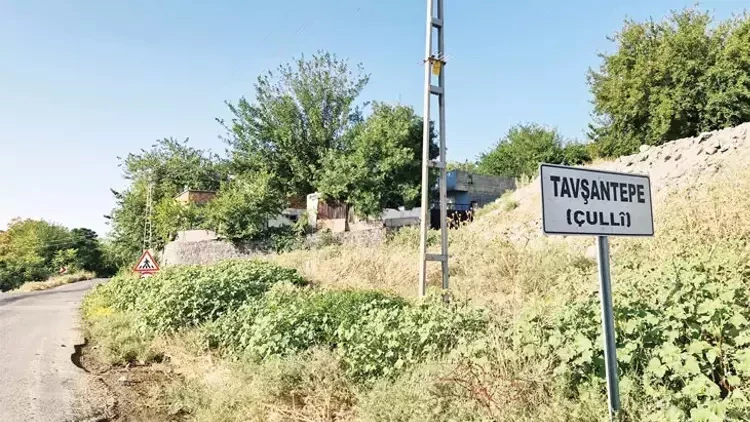
First Silence: Be Quiet, The Judiciary is at Work!
Let’s begin then: there are two crucial forms of silence in the judiciary. The first is the silence necessary to conduct investigations and prosecutions properly. The second — which took on a special dimension in the Narin Güran case — is the “silence of the family members (even the entire village), allegedly concealing the crime,” an accusation that quickly became a presumption, thereby erasing the presumption of innocence itself. The first rule of silence was violated by almost everyone — the media, bureaucracy, politicians, and social media users — especially after August 31, 2024. As for the second kind of silence, a large chorus formed — led by lawyers and politicians — in which the presumption of innocence and its natural extension, the right to remain silent, were utterly disregarded. Indeed, all emphasis on the family’s silence could only exist by ignoring these principles — and that is exactly what happened.
Silence is vital for justice. When judges demand silence in court, it is not only to maintain physical order in the courtroom. In the judiciary, silence is a necessity — it allows the case or investigation to reach a clear and fair conclusion by ensuring that speech occurs only within prescribed procedures and at appropriate times. It is an unwritten principle. The secrecy of investigation exists to secure this silence at the highest level and essentially means: “To prevent anyone outside the investigation authorities from interfering with the process, documents, or information; and to ensure that those authorities protect these with utmost care.”
The tension between silence and the right to information
There is a natural tension between this requirement of silence and the right to access or share information. It is true that judicial or political authorities often abuse this principle — one reason why the public instinctively reacts against secrecy in legal matters. Yet such abuse does not invalidate the principle itself. The balance between respecting confidentiality and ensuring public access to information — like justice itself — must be reestablished in every case. Each stage of justice, each procedure, requires constant inquiry, consideration, discovery, and a sense of responsibility. Judicial authorities (including political ones) must strive to rebuild this balance in every instance, creating mechanisms that respect the public’s right to know, while also explaining when patience and restraint are required. Ideally, these mechanisms should be managed and supervised by the prosecutor’s offices conducting the investigation. Every other authority that speaks out effectively opens a breach in this principle of silence.
Journalists, too, are bound by these rules. When they access information related to an ongoing investigation, they must evaluate it carefully rather than automatically publishing it. They must ask themselves: Where does the public interest lie — in keeping the information or in sharing it? Perhaps it should only be conveyed to the investigators? Verifying the authenticity and clarity of the information is an obvious prerequisite. A crude example: if the information reveals that judicial or political authorities are obstructing justice — in a country where enforced disappearances, unsolved murders, and paramilitary violence are not relics of the past — then, of course, it must be published. But if its publication risks helping the perpetrators escape, destroying evidence, or misleading both investigators and the public, then silence must prevail. This requirement applies from the reporter’s first contact with information through every stage of editorial decision-making.
The crime scene is not a stage
Another implication of this rule is that crime scenes — places of examination or investigation — must remain calm and isolated enough for proper work to be done. In the Narin Güran case, this principle of silence and calm was never respected. From the second day onward, countless journalists, politicians, and lawyers flocked to the village. Broadcasts were made constantly — by everyone from individual content creators to national TV channels. The Güran family’s homes were flooded with visitors. Of course, the public nature of the case would inevitably draw media attention, and the presence of lawyers and politicians might have seemed understandable at first glance. Yet it is impossible to claim that most of them respected the principle of silence. Quite the opposite — everyone who went to the village sought to talk, to collect and spread information, and to share details about the investigation itself in real time, without any filter. Those who didn’t go made up for it by spinning theories in studios or at editorial desks, while others simply copied and republished whatever fit their narrative.
Turning grief into spectacle
Worse still was the distortion of information as it spread. The “Dog/Abuse/Cigarette/Marijuana” incident discussed in the previous section was the first of many such examples. The issue with that so-called “dog incident” was not merely that Yüksel Güran’s words were professionally distorted — the very format of those interviews and talk shows poses serious ethical problems. When the subject is a judicial process — especially one involving a child’s disappearance or death — there are strict journalistic norms: do not casually interview or publicly broadcast statements from grieving relatives; do not publish their words without verification. At this point, the typical counterargument appears: “Then why did the mother go on TV?” When institutions and individuals are involved, accountability must begin with institutional failures, not personal ones. Grieving people cannot be expected to know when to speak or remain silent, what to say, or how their words will be interpreted. Even when they are entirely innocent, they are vulnerable — desperate. Reporters, editors, and producers, however, are obliged to know better. Thus, the fault lies not only in the distortion of words but also in the very act of repeatedly putting Yüksel Güran on television. That alone was a serious act of irresponsibility. Judicial and political authorities, too, should have taken preventive measures — not by imposing bans, but by warning family members about the potential harm of such exposure and ensuring that public communication followed a disciplined procedure. This is, and always has been, essential.
Second Silence: The Right to Remain Silent and the Presumption of Innocence
The second issue of silence arose from a claim that appeared very early — and quickly became a major source of noise: “The family knows something but remains silent. The mother knows but remains silent. The village knows but remains silent.” After Nevzat’s arrest on September 8, 2024, this silence turned into a presumption. Party leaders, human rights defenders, lawyers of all kinds, experts, analysts, and theorists began making speeches, giving interviews, and writing articles — all feeding this presumption with passionate conviction. This presumption of silence obscured another silence: the right to remain silent of those accused.
The popular saying “silence implies consent” effectively nullified the criminal law principle that silence is not an admission but a right. What is this principle? The right to remain silent rests on the presumption of innocence. It is the duty of investigators and prosecutors to find sufficient evidence to prove guilt. The constitutional guarantee that “no one shall be compelled to testify against themselves” is the ultimate affirmation of this right. Otherwise, coercion becomes normalized. One mechanism that protects both the presumption of innocence and the right to silence is the prohibition of pre-judgment (ihsası rey). If justice is a process of investigation and deliberation, and judges must evaluate evidence freely according to conscience before reaching a verdict, they cannot signal that verdict beforehand. Doing so negates the presumption of innocence. Although this rule applies specifically to judges, in truth — like silence itself — it concerns everyone: no one has the right to declare another guilty before due process is complete. (The violation of the presumption of innocence intensified after September 8; I will return to this in later sections.)
First Leak: Blood on the Rocks and the Governor’s Statement
We can now turn to three separate incidents that publicly broke the silence in the Narin case.
The first seems simple: the “blood on the rocks” incident. The other two foreshadowed the storm after August 31 — unlike the dog incident, these now involved the judicial authorities themselves: the detention of Enes Güran (due to bruises on his eye and bite marks on his arm), and the arrest of uncle Salim Güran following reports that “DNA was found in his car.”
Let’s begin with the blood on the rocks. Until August 28, the press had not produced much news. Reporters wandered around the village, interviewing locals, asking why the search was taking so long — while others reassured, “Be patient, answers are coming.” The first news-like report claimed that blood traces had been found on rocks near the Güran family’s home. Before the reports spread, the Diyarbakır Governorship issued a statement on August 25, the key part of which read:
“It has been observed that news and posts have circulated claiming that blood stains found on rocks near the home of missing child Narin Güran belong to her. It was determined that the stains resulted from a neighborhood child’s nosebleed.”
Two points are clear before we move on: Who provided the information that blood was found and being examined? The police, of course — meaning there was already an internal leak, a breach of confidentiality. Second: why did the Governor’s Office feel the need to issue a statement? Initially, it gave the impression that official information would henceforth come through the governor, but this soon proved untrue. The statement likely reflected unease about the leak itself.
Second Leak: The Bite Mark on Enes’s Arm
From the very beginning, law enforcement interviewed many individuals, including family members — not formal interrogations but so-called information interviews resulting in informal notes. In fact, the interview method has no place in Turkish criminal procedure. In its decision of January 14, 2025 (application no. 2020/14678), the Constitutional Court criticized this practice and ruled that statements obtained through it have no evidentiary value:
“Considering that the applicant’s statements obtained through the interview method, which has no basis in criminal procedure, were not confirmed during trial… it is understood that the digital data mentioned in the conviction for membership in an armed terrorist organization, though not the sole evidence, were of decisive importance.”
(Full decision available at: Kararlar Bilgi Bankası[1])
Leaving aside the legal issues surrounding such unlawful practices, let us stay with the theme of silence.
Law enforcement conducted an interview with Enes Güran as early as August 23–24. They noticed a bruise on his eye and later a bite mark on his arm. Forensic photographs dated August 25 confirm this. However, the public learned of his official detention only on August 28, and by the next day, the news had exploded with sensational headlines like “Shocking details emerge”. Enes was released on August 29. Forensic analysis determined that the bite mark did not belong to Narin Güran. Yet this second leak, combined with the earlier “Dog/Abuse/Marijuana” narrative, paved the way for a flood of reports implying Enes was the culprit. Soon, grotesque and baseless scenarios began to circulate — the first being: “Narin saw Enes and his friends harming a dog and…”
Although forensics confirmed the bite mark did not belong to Narin, the reports remained chaotic: most said no DNA was found and the bite didn’t match, yet some insisted the truth could only be confirmed once Narin was located. Almost all mentioned an important detail: Enes had taken three showers, so DNA couldn’t be recovered. Sometimes this was attributed to “publicly available information,” other times falsely cited as “from the Forensic Medicine report.” Meanwhile, experts appeared on TV explaining the significance of bite marks; retired detectives claimed to have solved murders through them. Thus emerged a market for detectives, retired officers, and self-styled criminologists.
The following three reports represent the most professionally written among them — yet they share the same fundamental flaws:
- SABAH – Was Narin Güran Found? Major development in Diyarbakır disappearance! Forensics confirm: Bite marks on brother’s arm[2]
- GAZETE PENCERE – Major development in missing Narin case: Bite marks on brother’s arm not from Narin[3]
- TAKVİM – Missing Narin case bite-mark detail! Detective comments: I once solved a murder from a bite mark.[4]
Despite these reports, social media quickly escalated matters, claiming “Bite marks confirmed to belong to Narin.”
The Commander and The Minister’s Statements
The core issue here was the leaks. At the time, in August, these might not have seemed serious, but by September, unfiltered information from law enforcement to journalists became uncontrollable. As public noise grew, “official statements” — no matter the intent — served as confirmation for emerging theories. On August 28, when we learned that Enes Güran had been detained, the Provincial Gendarmerie Commander announced:
“We have evidence and statements. We tracked Narin’s movements in the village minute by minute. We are following the evidence closely — we are very close to a conclusion. Inevitably, we view this as a criminal case, considering all possibilities.”
The commander’s statement was essentially a “public relations” effort: search operations had covered 12,565 vehicles and 32,952 people; 47 houses and 22 abandoned buildings were inspected; 78 surveillance cameras were reviewed; 66 people were interviewed, including 8 suspects and 58 witnesses. It was clearly an attempt to defend his team against criticism — explaining how extensive the efforts were. That same day, the Minister of Justice also made a statement, saying there was one person in custody and that all details were being examined, expressing hope that Narin would be found safe.
Taken together — the statements from the commander, the governor, and the minister — they collectively breached the principle of silence. Yes, public communication is necessary, but when a gendarmerie commander speaks instead of the prosecutor, and both the governor and minister add comments, the risk of distorting the investigation is immense. In a climate where judicial independence carries little weight, such interventions by political and bureaucratic figures have become routine — which only normalizes the problem further. In truth, their words tend to influence public opinion rather than inform it, serving as subtle admissions that the judiciary is not truly independent.
Among these three statements, the commander’s was particularly significant: “We are very close to a conclusion. We have strong evidence.” Naturally, this was interpreted as pointing to Enes Güran, who had just been detained. The minister’s statement was seen as confirmation. When uncle Salim Güran was detained on August 31, the implication expanded further. By early September, the Minister’s remarks made the issue even clearer — the political authority itself was hinting at guilt.
A Futile Attempt at Silence: The Broadcast Ban
Of course, all these statements were deeply tied to the political climate. On August 24, 2024, DEM Party MP Ceylan Akça questioned the suspicious power outage in the village during critical search hours, saying, “We cannot accept a power cut that could allow potential perpetrators to move freely.” Social media reactions were, predictably, filled with hatred. On August 27, the HÜDA PAR deputy leader visited the Güran family, saying he would maintain dialogue with officials. Within days, that visit was reframed as evidence of the family’s nature, and by early September, the issue had evolved into an outright “Hizbullah connection” narrative — one of the loudest sources of noise.
In response to growing leaks, the Diyarbakır Prosecutor’s Office requested a broadcast ban on August 29. The Diyarbakır 5th Criminal Court of Peace granted it the same day. The head of RTÜK (the media regulatory authority) then stated: “The sharing of unverified information and speculation in the media undermines the sensitivity of a case involving a child. We strongly urge all broadcasters to comply with the ban to protect the family and ensure an effective investigation.”
In an environment where institutions responsible for maintaining silence either did not exist or were not functioning, this move could not be more than a late bureaucratic plea for silence. Those same authorities who were supposed to safeguard silence were, in practice, violating it. Moreover, the ban itself — given the state’s poor record in such matters — immediately became part of new narratives and fueled new theories.
Linked to this overture of three incidents, but far more consequential than the others, was a critical development on August 31, 2024, when Salim Güran was taken into custody. A Facebook post made under the name Murat Çınar Çatalca, and the way that post was turned into “news,” caused events to spiral out of control. This incident — along with subsequent reporting and statements about Salim Güran — is pivotal both for this analysis and for the case itself, and it must be examined in detail.
That will be the subject of the third section.
External References (4)