The Narin Güran Case #1
The Silence of the Lambs, The Noise of the Wolves
Judgment belongs to God; the final, absolute, flawless judgment is His. Human judgment is flawed; no one, not even the most competent judge and the most competent judicial body, is free of error. For this reason it was said: “Do not judge lest you also be judged.” God commands being just; whoever is not just commits oppression and becomes one of the tyrants. Yet He does not say how to be just. Striving for justice is the duty of the human being. There is no ready-made formula for justice; it is always a search, an effort, a field of struggle. Because there is no ready-made formula and because judgment belongs to God, judges do not rule by “truth” or “the absolute fact,” but by their “conscientious conviction.” For the same reasons, every form of adjudication, including judicial adjudication, has been bound to rules and principles; it is subject to developed protocols and specialized methods. Not only the judge, not only the prosecutor, not only the lawyer, but everyone is bound by these rules. Where everyone, relevant or not, acts in violation of the rules, contrary to the principles, indifferent to the protocols, and heedless of the methods, the adjudication performed in that place can produce nothing but oppression. There is no advance justice; even if one complies with all rules a hundred times, when one does not comply once, disaster emerges.
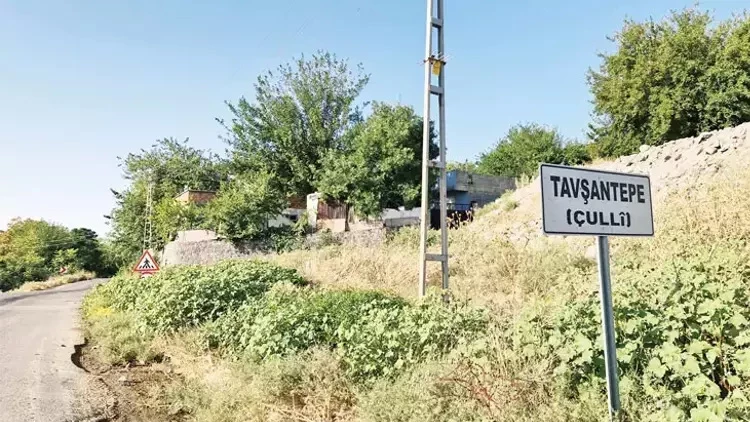
I am speaking of the Narin Güran case. The case showed that in Turkey the “capacity to adjudicate” is filled with problems so serious and so weighty that they make it almost impossible to reach justice — problems that begin with individuals one by one and extend to the judiciary itself, to politics, to the media, to academia. From the media and politics first and foremost, to the investigative and prosecutorial bodies, various actors emerged as perpetrators of this loss of capacity: Even if the judgment rendered by the court happened to be “correct” by coincidence, everything that led to that “correctness” was faulty, and therefore that correctness could only be an accident; justice cannot be based on accident. Of course, starting with the dissenting opinion written at the appellate stage and the judge who wrote it, there were those who watched out for “the right things” from the day the matter became public, there were those who warned of the errors, but neither those warnings nor that dissent — full of legal knowledge, insight, and insistence — were able to transform the decision from a mere coincidence into a decision reached through a judicial activity aiming at the ideal of justice. Likewise, the decision to overturn the “harboring the offender” case, which forms another bundle of lost judicial competence, displayed a hopeful perspective and a strong grasp of law. But we still do not know whether this “light” and “reasonable speech” will be able to overcome the darkness and noise that have surrounded the case from the very beginning. The howling of the wolves drowned out the silence of the lambs so completely, and there are so many who are pleased with that noise, that one’s hope breaks.
In this study I will focus especially on how the media — and soon after, politics — handled the matter starting from the very first day, because primarily what led the whole affair to turn into a “disaster of investigation and prosecution” was the high-decibel noise environment created jointly by the media and politics. Of course, if the subject is the judiciary, the government must be seen as the primary responsible actor in the widest frame; I see it so, because the responsibility for, for example in this file, the obvious and difficult-to-understand inadequacy of the judicial police, which is one of the steps of the judiciary, naturally lies with the government. But before sticking the big needle into the government, there are smaller needles owed to the media of which I am a member, to the law, and to politics as a whole. The fact that journalists do not work in line with journalistic norms, that politics steps in without caring about the ideal of justice, that the “defense,” that bar associations, throw the “presumption of innocence” into the trash and become blind partners to the joint wrongdoing of media and politics — none of this can be excused solely by the government’s flawed media and legal policies.
The second aim of this study is to distinguish the shadows that flawed attitudes in the media and in politics have cast upon the investigation and prosecution. Of course, the problems of the judiciary, especially in the investigative phase, will also remain within the frame. Let me note immediately that I will not enter into “evidence discussions,” because that requires another method and another focus; this work, essentially, is not a legal study but a study on the relationship between law, media, and politics. In short, this work focuses exclusively on the malfunctions in how the media, politics, and legal mechanisms operate, and in how they relate to one another. Let me also state at the outset that I am not looking for a “culprit” in these areas, and therefore I will continue, as far as possible, without mentioning proper names, for two reasons: First, it benefits no one to lock the discussion onto the sins or virtues of particular individuals; second, the problem is not personal mistakes but entirely structural, systemic in character.
The Reason for the Intense Attention: Concience?
First, we must begin with the intense attention the media and politics showed to the matter. Of course, if a child is missing it is good and necessary that the media, politics, and society pay close attention. But from many similar, very painful, very grave cases that occurred before and after, we know that the way interest in the Narin case spread socially is almost unique. Why? If we say “conscience,” then the scarcity of interest in other matters remains unexplained; conscience is not something that erupts like a volcano now and then.
One explanation is that the month of August, when the incident occurred, was “weak in other agenda items.” In the absence of agenda, the media has the ability to create one for itself, especially if what is at stake is the disappearance of an innocent child. But this “truth” is not very sufficient, because the same media that does not bring to the forefront of the national agenda the case of a two-year-old baby whose body cigarettes were extinguished on and who was raped, that is not very eager to report on the barely adolescent “yes-sir boys” who lose their arms and legs in machines at workplaces, that writes “the child laborer killed by his boss” twice and moves on, must also have had other motives underlying its attention to the Narin case.
Reason #1: A child coming out of a Qur’an course!
The first reason was that the child disappeared after coming out of the Qur’an course. The potential to build a discourse against the government around criminal incidents that occur especially in places where children are present collectively was the first major reason why those who live in the media and social media with the label “opposition,” and of course opposition parties, took close interest in the matter; naturally, the “oversight” function of the media requires this, but the intensity of that interest compared to other cases still needs further explanation.
Until the date the child’s body was found, nearly all the reports in “opposition outlets” and in a significant part of pro-government outlets began with the phrase “Narin, who could not be reached after leaving the Qur’an course…” That formula continued to be used for a long time even after the child’s body was found. One of the developments that increased this motivation was the early-stage reports that the village imam was “under suspicion.” These were grave reports: it was recklessly written and broadcast that “pornographic images were found on the imam’s phone,” even that he was a “swinger,” and that this had come up in police questioning. Much later, one journalist finally thought to ask the authorities: the investigation was being conducted not by the police but by the gendarmerie, there were no such images on the phone, and such a question had not been asked; questions unrelated to the investigation would not be asked.
Both that lie and the persistent use of the formula “the child who disappeared after leaving the Qur’an course…” had a clear purpose: it is a formula that is supported by, and in turn strengthens, the claim that the government has no priority such as protecting women and children, and therefore in places where children are collectively present, including Qur’an courses, every sort of threat is possible; that there are ill-intentioned people there; that the government is not interested in eliminating those threats. Many media workers, politicians, and jurists sadly see statements and narratives based on these templates as equivalent to “being political,” and they produce and disseminate these statements without scrutiny, without filtering them through criticism, thinking that they are thereby “doing opposition.”
But the interest was not limited only to “secular groups absolutely opposed to the government.” From the very beginning other groups also entered in with “special motivations.”
Reason #2: Hizbullah, the village guard system!
While the Qur’an course issue was still hot, two more claims were released into circulation: the village was a “village guard village,” even a “Hizbullah village,” and bullets and weapons had been found during the searches. These had already reached the rank of “truth,” and thus the stance in the media and social media spread also to opposition parties and civil society organizations. Statements poured down like rain; marches were organized. Thus, just as much as the “secular” segments seeking to oppose the government, those deeply (and absolutely justifiably) disturbed by the terms “village guard” and “Hizbullah,” the region’s lawyers, politicians, and institutions also mobilized to publicize and socialize the issue. If the child of a village and a family that are this intertwined with the state, this close to the state, is missing, then the responsible party must be the state.
Finding themselves under a two-pronged barrage of criticism, government figures began to try to produce “counter-arguments and counter-statements.” The visit to the village and the family by one of the region’s well-known pro-government politicians, Galip Ensarioğlu, and the words he said afterward made the voices of the two camps that had already risen to their feet grow even louder, and caused many segments of society who had not noticed the matter until that day to begin following it closely. According to his own speech, the reason for Ensarioğlu’s visit was to respond to the atmosphere that had been formed against the government because of the incident and to some of the arguments circulating there. He was going to say that the family was not Hizbullah, but from the Welfare Party tradition, and he was going to emphasize that it was not right for politics to be involved. Indeed, politics should not have become involved, but his own visit and words did not prevent the very thing he criticized; they amplified it. One particular remark would ensure that the outcome was the exact opposite of his intention:
“There is confidentiality in the investigation. Also we have come to the final stage. There are things that we sometimes do not know, and sometimes know but must not say. Because the family, you know, is our friends. Because the matter is at such a sensitive level, we do not want to say something that will upset them too much. After we reached the lifeless body of our girl Narin, we are about to reach the perpetrators very quickly.” [1]

Galip Ensarioğlu
These words drew intense reactions; Mr. Galip and other government officials stated that his intention had only been to emphasize the confidentiality and sensitivity of the investigation. But these statements had little effect. At the time this explanation was made, 21 members of the Güran family were in custody. Mr. Ensarioğlu’s political intervention under the theme of “not involving politics,” rather than preventing, only cemented the inclinations and convictions that had been forming against the family since 21 August. It is likely that the anti-government tendencies and beliefs formed in the political sphere led to the emergence of the idea of the “family being guilty,” not only among opposition segments but also within government circles. Indeed, the next day Ensarioğlu reiterated the argument that Narin might have “seen something she was not supposed to see,” thereby positioning himself at a common point with that tendency. In fact, in Mr. Galip’s statement there is also an implication of “there may be offenders within the family,” and his aim seems to be to prevent labeling the entire family as guilty.
Reason #3: Hatred of Kurds!
In the early days of the case, that is, in the period up to 25–26 August, those who viewed the matter within the framework of an “opportunity to oppose the government” were active, but after an unbelievable distortion and implausible conclusions drawn from words spoken by the mother, Yüksel Güran, on a television broadcast, “Kurd hatred” also entered into play — sometimes openly, sometimes dressed up in various colonialist discourses. Shares and analyses began to fly around on themes such as feudalism, the tribe-state relationship, the tribe-crime relationship, and the “culture of the region.” (As this article proceeds we will also see examples.) The manner in which Yüksel Güran’s words were distorted also showed how grave the condition of the media is. Through various arguments about the intertwined relations among a reactionary government, its social allies, and the tribal structures in the Kurdish provinces — namely the triangle of “state, religious order, Kurdishness” — the hostility against Kurds was then mobilized.
By then, four groups of actors had lined up, using the media and social media, and the media–social media dynamic further fanned their flames.
Those seeking an opportunity to oppose the government through secular desires.
Those wanting to conduct opposition to the government on the Hizbullah–village guard axis.
Racist segments who dress up their hostility to Kurds with right-wing or left-wing arguments.
And, of course, the government and those who seek to protect and defend it.
As the first example of the grave role played by the media, let us now look closely at the words of Yüksel Güran on television; if you scan internet sites and social media platforms dated 28 August 2024 and after, you will see the following report/information:
“The Mother of Missing Narin Güran in Diyarbakır Made a Confession Live on Air: I Didn’t Say It Because They Would Suspect Us.”
Before moving to what is written under this long headline, let us look at the headline itself. The word “confession” shows that, from the perspective of those making the report, the mother is assumed to be guilty or to know who is guilty. Because the editor (when we read the story with the headline) takes us to a cluster of suspects: the son who is about to leave for military service and/or his two friends.
The sentence chosen from the mother for the headline was specially selected (and is not correct) in order to focus suspicion on the family. The mother has “remained silent until now,” so we have a strong “evidence” that “silence means consent.” Yet under criminal law principles, silence is not used as evidence; silence is a right, and it signifies not “admission,” but “non-acceptance.” Who cares about law? Before the unleashed genius of the journalist-editor, what science — let alone law — could stand?
Now let us look closely at the report:
“Narin’s mother Yüksek Güran, on the program ‘Didem Arslan Yılmaz’la Vazgeçme,’ revealed a detail from the day of the incident, saying, ‘I couldn’t say it because you would suspect us,’ and confessed as follows:
‘The dog ate the turkey, and my son who is about to go to the army and two of his friends were smoking in the back of the house at the time Narin disappeared and were torturing a dog. I said, don’t do it, it’s a sin. I’m saying this for the first time, I didn’t say it because they would suspect us.’”
How nice, how convincing, how “evidentiary,” is it not? Of course, these are sentences re-written by “editors,” not what the mother actually said. She does not in fact say on the program, “I didn’t say it because you would suspect us.”
On the program she says:
“I went up to the roof. I laid out my bedding. I saw that Enes was over by the stable, I could hear his voice. I couldn’t see him. (…) I said, Enes, the dog ate my turkey last night. I called out to Enes. I saw that his two friends were there too. I hadn’t mentioned this before, I hadn’t said it first. His two friends were there. I saw (SILENCE) I said, it’s a shame, it’s a sin (SILENCE) The host cuts in saying, ‘They’re smoking.’” [2]

(The segment from 34:45 to 35:25 of the broadcast. In the first “Silence” she says “they’re smoking,” in the second silence she says “you’re smoking at this age — your lungs—”.)
There is no such thing as torture of a dog. Where did that come from, then? From the phrase “it’s a shame, it’s a sin.” But she is saying that to the young men smoking. What is the confession? Nothing. She says “I hadn’t mentioned this before,” meaning that as she appears on the program and is asked questions, she recounts details and events that come to mind. During the program a journalist sitting next to Yüksel gives information: law enforcement officers have arrived, the program will end, statements will be taken. The same journalist, at the beginning of the segment, recounts that up to that day statements had been taken “for information” from many people including family members “without any detention order.”
But of course it did not end there; the invented phrase “torture/abuse of a dog” quickly turned into “rape of a dog” on social media, and the word “cigarette” turned into cannabis. Two days after the first broadcast on 26 August, that is after the spread of the “cigarette into cannabis” and “torture of a dog” claims, the program host took up the matter again, effectively correcting and refuting reports that were not her fault but had been attributed to her program; she stated that there was absolutely no mention of cannabis or any illegal substance, and that RTÜK had fined them for the utterance of the word “cigarette,” which is why that part had been muted.
When I compare the words I took from the program to the sentence in the published reports, the following is seen: the editors have made the sentence discursive, in order for it to “have effect,” whereas Ms. Yüksel speaks in fragmented phrases. But if they took it as she spoke, it probably would not “have effect.” There is nothing to justify the word “confession,” which they placed in the headline. There is no such thing as cruelty to a dog. Also, the mother does not say “my son who is going to the army, Enes”; because she knows which son is going to the army — the ones who do not know are the editors! The one going to the army is not Enes, it is Baran.
What is happening here? How can a report like this be made? For people who have no editorial competence, or whose only competence is to value “influencing public opinion” above editorial-journalistic norms, there is nothing abnormal in this. This prototype report spread extraordinarily that day; it was used mostly by copy-paste. No one bothered to watch the program. Those who did this were not only small news portals; the websites of two quite serious outlets, Cumhuriyet[3] and Karar[4], ran the report without using the word “confession,” but with an emphasis on “detail,” while still preserving “abuse of a dog” and the phrase “I couldn’t say it because they would suspect us.”
If we also add the social media users who further distorted the so-called facts in the report (“I’m not saying ‘troll,’ because in this process countless ordinary users behaved like ‘trolls’”), it would still be difficult to estimate the impact produced.
After this report, “enemies of Kurds” became perhaps the loudest contributors to the noise that had formed around the matter.
The effect of this report lasted quite a long time. In fact, she had said neither “torture” nor “abuse,” but what does that matter? This report and the clamors that followed led (again) to Enes Güran being questioned as the first candidate offender in the killing. Drug tests showed no cannabis or any narcotic trace, but we did not see any headline in any newspaper such as “Major mistake, Enes did not smoke cannabis.” Far from seeing that, even as late as around 16 September, professors on television and “successful detectives” were still explaining the importance of the dog scenario. Of the scenario that did not exist.
This has gone on too long. I will cut the introduction here. I will publish the second part in a day or two. Thank you for your patience.
External References (4)