The Narin Güran Case and the Search for a Scapegoat: The Decay of the Maximalist Gaze
Through René Girard’s scapegoat theory and Émile Durkheim’s concepts of punishment and solidarity, a sociological analysis of public reactions surrounding the Narin Güran murder; an examination of how a family was turned into a scapegoat.
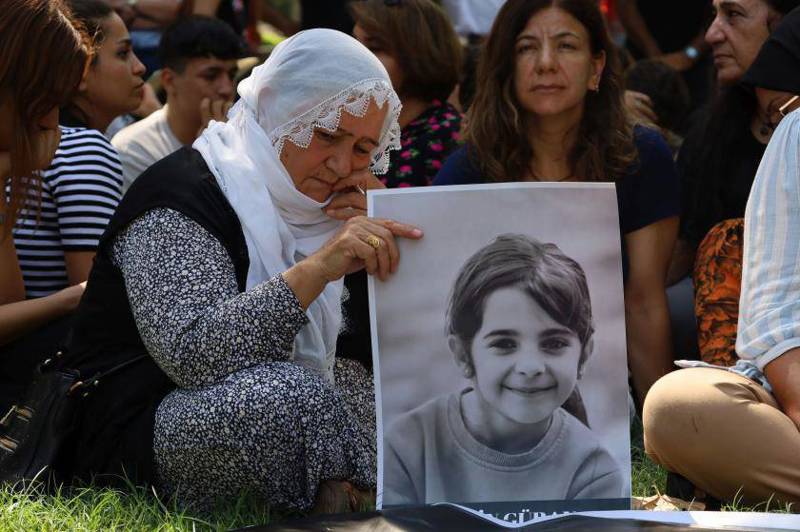
When René Girard’s scapegoat theory and Émile Durkheim’s concepts of punishment and solidarity are taken together, it becomes clear that, in moments of social crisis, sacrificial rituals serve a fundamental function for the preservation of order and the reinforcement of solidarity. According to Girard, mimetic desires — desires modelled on the desires of others — lie at the root of conflict between people; because the goals are limited, this state of affairs makes tension and conflict inevitable.
When mimetic desires intensify to a point that threatens the social order, that violence is discharged by being focused on a victim. In the fragile, crisis-ridden moments of the social order, the scapegoat — the one onto whom accusations are directed and onto whom collective violence is loaded — becomes a focal point for releasing anger and for re-establishing a temporary unity. Girard defines this process as a non-coincidental form of violence directed, in fact, at a victim deliberately chosen for the sustainability of society, and notes that these patterns of behaviour continue in the modern world in such forms as bullying and lynching.
Durkheim, in parallel, evaluates punishment as an expression of collective conscience and a re-affirmation of social solidarity. Crime is an act contrary to society’s shared conscience, and punishment is a passionate response that shows that this shared conscience has been attacked. Crime means a violation of collective norms and values; punishment, by re-mobilizing this shared conscience, takes on the function of reinforcing social cohesion.
Maximalist Narratives and Legal Processes
Through the maximalist narratives put forward by some Kurdish politicians — JİTEM, Hizbullah, state-local-element collusion, feudalism — and by Turkish nationalists — consanguineous marriage, ağa-style domination, the alleged worthlessness of girls in the eyes of the family — narratives that have no contact whatsoever with the concrete, criminal reality of the case, the lives of a family and a village were thoughtlessly turned into hell.
Legal institutions such as the Diyarbakır Bar Association also took a stance one would never have expected from them. Even when, during the investigation, allegations of torture were on the agenda, no action was taken on the grounds that there was no signed written statement. The former bar president behaved as if the details of the murder had been proven from the outset, and spoke of the village as a site of organized evil.
Media outlets on the nationalist-modernist line and racist influencers chasing engagement also fanned prejudice by triggering orientalist stereotypes about rural life in the east. On television news and programmes, sudden inferences about “fatalism” were made regarding the geography of the region.
Time Analysis and the Crime Scenario
Between the moment Narin appeared heading toward the path and the moment her neighbour Nevzat Bahtiyar drove her toward the riverbed, there are 25 minutes. If we also subtract the time Narin spent walking on the path and the time it took the car to leave the village, this drops to 18 minutes. If we are to believe the dreadful stories that have been constructed: Narin would climb the hill, come home, witness in her home an event she should not have seen, someone would kill her, the mother-brother-uncle would coolly accept this, the uncle would then call his neighbour Nevzat Bahtiyar — a man he hadn’t called in months — to dispose of the body, would summon down to the path the neighbour who was watering eggplants at the entrance to it, the neighbour would see the body and would be given a hint that Narin had seen a forbidden sexual relationship, this neighbour would also coolly accept this, and together with the uncle would put the body in his own car and set off toward the river.
All this fantastic story, recounted as if it were an ordinary daily occurrence, took place in exactly 18 minutes. And how striking it is that this story is being believed.
Conclusion
Yes, I repeat: some crimes are simply crimes. Tons can be said — and is being said and written — about the social structure of the east of Turkey and its troubled relations with the state. But some crimes are simply crimes. In this context, what was it that prevented people of conscience from thinking this way, and that allowed them, by means of grand narratives, easily to take aim at a family and arrive at a sensation of moral goodness, truth and beauty? Pondering these questions, I think, is more striking and more instructive.
At whose sacrifice is the social group to which we feel we belong, or society as a whole, decorated with the laurels of “good,” “true” and “beautiful”? This is the question we need to ask ourselves.
Social Psychology and the Search for Justice
The social explosion around Narin’s murder stands before us as a vivid example of the mechanisms shown by Girard and Durkheim. In a moment of crisis, different classes, ideologies and faith groups quickly came together; they united in the conviction that the culprit had to be punished. Even thin evidence proved sufficient for a community of believers, and the family was declared the scapegoat.
In the end, society achieved a short-term relief and cleared its collective conscience. But, in Girard’s terms, this is like a placebo. As long as the community continues to accept this remedy on faith, it relaxes and abandons the search for the truth. Yet the only path that will lead us to a resolution of crises is the bringing to light of the actual situation through concrete and convincing evidence.
Why were people so ready to believe in the possibility that so many fantastic events occurred in 18 minutes? If a structural analysis is to be made, I think a backstory must be supplied first. What was it that detached democratic, middle-class, educated people from concrete data and made them feel the need to cling with both hands to grand narratives?